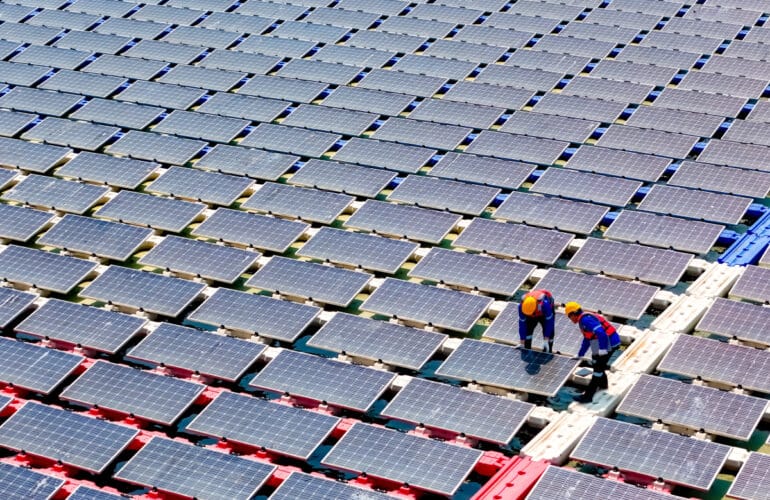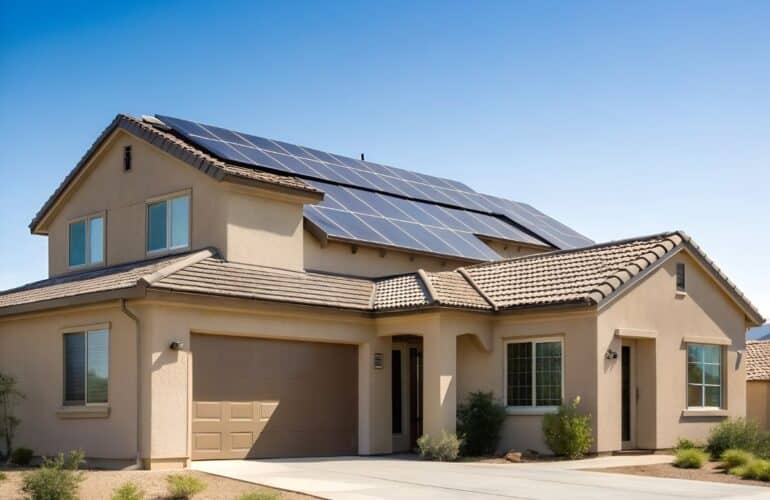
Solar panels can produce electricity whenever sufficient sunlight reaches them, but that does not necessarily mean a standard residential solar system will continue powering your home during a utility outage. Most grid connected solar systems are designed to shut down automatically when the electrical grid fails.
This safety feature surprises many homeowners in Palm Desert and throughout the Coachella Valley. A house may have a roof covered with solar panels and strong desert sunshine outside, yet the lights can still go out when utility service is interrupted.
To use solar energy during an outage, the home generally needs a properly designed backup system that can safely separate from the utility grid. This may include battery storage, a backup capable inverter, automatic transfer equipment, a protected critical loads panel, or another approved energy management configuration.
JJ Energy Inc helps homeowners evaluate solar panel installation, battery storage, backup power, electrical upgrades, and whole home energy needs throughout Palm Desert and the Coachella Valley.
Quick Answer
Solar panels alone usually will not power a grid connected home during an outage. Standard solar systems shut down to avoid sending electricity onto utility lines while crews may be repairing them. A solar system paired with compatible battery storage and properly configured backup equipment may continue powering selected circuits or, in some cases, a larger portion of the home.
The amount of backup power available depends on the battery capacity, inverter output, solar production, household electrical demand, weather conditions, and which appliances are connected to the backup system.
Why Do Solar Panels Shut Down During a Power Outage?
Most residential solar systems are connected to the utility grid. During normal operation, the solar panels produce direct current electricity, and an inverter converts that electricity into alternating current that the home can use. When solar production exceeds household consumption, the system may send excess electricity to the grid, depending on the utility agreement and system configuration.
When the utility grid fails, a standard grid tied inverter detects the interruption and shuts down. This process is commonly called anti islanding protection. It prevents the solar system from energizing power lines that utility workers reasonably expect to be inactive.
The shutdown is not an indication that the panels are defective. It is an essential electrical safety function built into grid connected solar equipment.
The U.S. Department of Energy explains that solar paired with storage can detect the loss of grid service and operate in an islanded mode when the system has been designed for that purpose. Homeowners can read more through the Department of Energy’s solar and resilience guidance.
What Is Islanded Operation?
Islanded operation means that a home energy system temporarily disconnects from the utility grid and creates a separate electrical system for the property. During this period, the solar panels and battery may power approved household circuits without sending electricity back to the utility lines.
A compatible inverter, battery, disconnecting equipment, controls, and electrical panel configuration are necessary to create this protected environment. The system must recognize an outage, isolate the property safely, and manage electricity production and consumption while utility service is unavailable.
When utility power returns and stabilizes, the system can reconnect according to its design and operating requirements.
Can Solar Panels Power a Home During the Day Without a Battery?
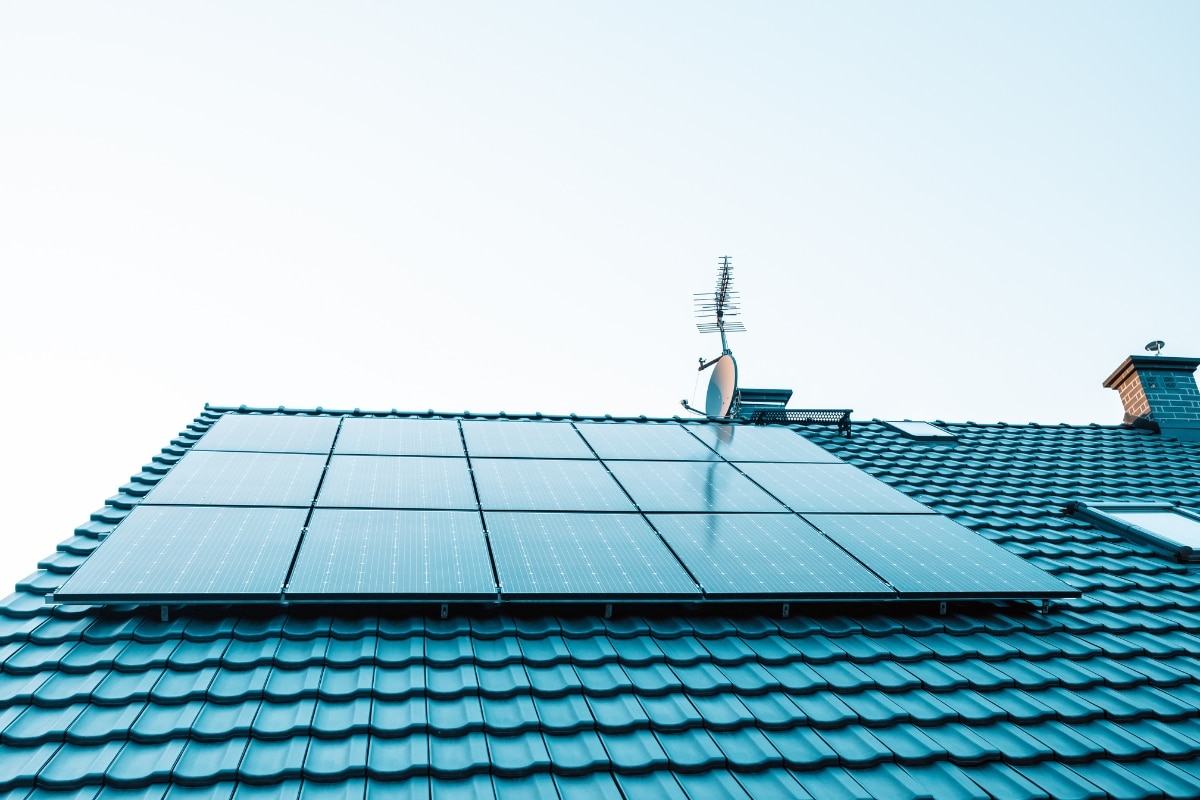
Some specialized solar systems can provide limited daytime power without a traditional battery, but this capability is not standard and may be restricted to a dedicated outlet or a small number of loads. Solar production also changes whenever clouds pass, shading occurs, or household demand exceeds the available output.
For most homeowners seeking dependable outage protection, solar panels alone are not the same as a backup power system. Battery storage or another controllable backup source provides a more stable way to support appliances when solar production changes.
A homeowner should not assume that a new solar installation automatically includes outage capability. Backup operation must be discussed during the design process and confirmed in the final equipment specifications.
How Does a Solar Battery Work During an Outage?
A solar battery stores electricity that can be used when the home needs it. Depending on the system settings, the battery may charge from solar production and reserve some of its capacity for an outage.
When grid power fails, compatible controls disconnect the property from the utility and begin supplying electricity from the battery. During daylight hours, the solar panels may continue producing energy to serve household loads and recharge the battery. At night, the home relies primarily on the electricity stored in the battery.
If household demand exceeds the battery’s output or the battery becomes depleted, some or all backed up circuits may lose power. Effective system design therefore requires more than selecting a battery based on its advertised storage capacity.
Learn more about available backup power systems in the Coachella Valley.
What Can a Solar Battery Power?
A backup system can be designed around essential circuits or broader whole home coverage. Essential load systems may support refrigerators, lighting, internet equipment, selected outlets, garage door openers, security systems, medical equipment, and limited air conditioning.
A larger system may support additional appliances, but every electrical load affects battery runtime. Central air conditioning, electric water heating, pool equipment, ovens, clothes dryers, electric vehicle chargers, and other high demand equipment can consume stored energy quickly.
This is particularly important in Palm Desert, Palm Springs, La Quinta, Indio, Rancho Mirage, and nearby desert communities where air conditioning may be one of the most important household loads during a summer outage.
A professional load analysis can identify which circuits should remain active and how much inverter output and battery capacity may be required.
Can Solar and Battery Storage Run Air Conditioning?
A properly sized solar and battery system may operate certain air conditioning equipment, but this depends on the equipment’s starting demand, operating demand, battery output, inverter capacity, thermostat settings, home insulation, and outdoor temperature.
Some backup systems are designed to run only a smaller air conditioning unit or selected cooling zone. Others can support a central system for a limited period. A battery that can run lights and a refrigerator may not have enough power output to start a large compressor.
Load management can help extend backup duration. During an outage, homeowners may need to raise the thermostat, cool only occupied areas, avoid operating multiple high demand appliances simultaneously, or temporarily disconnect pool and vehicle charging equipment.
How Long Will a Home Battery Last During an Outage?
Battery runtime is not a fixed number. It depends on how much usable energy is stored and how quickly the home consumes it.
A household using only a refrigerator, a few lights, internet equipment, and small electronics may remain powered much longer than a household operating central air conditioning, cooking appliances, pool pumps, and an electric water heater.
Daytime solar production can extend the outage duration by serving loads and replenishing the battery. However, solar output can be reduced by clouds, dust, shading, panel orientation, high temperatures, and seasonal changes.
A backup design should be based on the homeowner’s priorities. The relevant question is not simply how long a battery lasts, but how long it can support the specific circuits the homeowner considers essential.
What Happens When the Battery Is Full?
During an outage, the energy management system continually balances solar production, household consumption, and battery capacity. When the battery is full and the panels are producing more electricity than the home is consuming, the system may reduce or temporarily stop solar production.
This behavior helps keep voltage and frequency within appropriate limits. Because the property is disconnected from the utility grid, excess electricity cannot simply be exported in the usual manner.
As the home begins using more electricity or the battery level drops, solar production may increase again according to the system’s controls and available sunlight.
What Happens When the Battery Is Empty?
If a battery reaches its minimum reserve level during an outage, the system may shut down backed up circuits to protect the battery. The system may restart after the solar panels produce enough energy and operating conditions are satisfied.
Some configurations can coordinate with a standby generator, creating an additional source of power when solar production is low or an outage continues for an extended period. This type of integration requires compatible equipment and professional design.
Homeowners concerned about multiday outages should discuss battery capacity, generator integration, fuel availability, essential circuits, and load management before selecting a system.
Is a Battery Better Than a Standby Generator?
Batteries and standby generators solve the outage problem differently. A battery operates quietly, can respond quickly, and can be charged with solar energy. It does not require fuel delivery during normal solar operation.
A standby generator may provide power for a longer period when sufficient fuel remains available, but it requires maintenance, produces noise and exhaust, and must be installed with proper clearances and transfer equipment.
The better option depends on the property, outage risks, electrical loads, fuel access, budget, environmental priorities, and desired level of independence. Some homeowners may benefit from solar and battery storage, while others may prefer a generator or a coordinated system using more than one backup source.
Can an Existing Solar System Be Upgraded With a Battery?
Many existing solar systems can be paired with battery storage, but compatibility must be evaluated. The contractor may need to review the inverter, solar array, service panel, utility interconnection, available wall space, backup loads, and local permitting requirements.
An alternating current coupled battery can sometimes be added without replacing the existing solar inverter. Other systems may benefit from a direct current coupled configuration or updated hybrid inverter.
The correct approach depends on the existing equipment and the homeowner’s goals. An inspection can determine whether the current solar system, electrical service, and panel are ready for backup integration.
Will the Electrical Panel Need an Upgrade?
A battery or solar installation may require electrical modifications when the existing panel lacks capacity, compatible bus ratings, available breaker space, suitable grounding, or safe equipment condition.
An older panel may also contain components that are damaged, obsolete, or inappropriate for modern household loads. Homes adding solar, battery storage, electric vehicle charging, heat pumps, or other electrical equipment may require a broader assessment.
JJ Energy Inc provides electrical system upgrades throughout the Coachella Valley. The project may involve a main service upgrade, subpanel, critical loads panel, load management equipment, new breakers, or related improvements.
How Should Palm Desert Homeowners Size a Backup System?
Backup system sizing should begin with the appliances and circuits that must remain available during an outage. Homeowners should identify critical cooling needs, refrigeration, lighting, communications, medical devices, water systems, security equipment, and other priorities.
The contractor can then review appliance wattage, startup demand, daily energy use, solar production, roof conditions, panel capacity, and available installation space. Designing around actual electrical loads produces a more useful result than selecting equipment based only on brand name or battery capacity.
Desert conditions should also be considered. Equipment placement, ventilation, direct sun exposure, dust, outdoor temperature, and manufacturer installation requirements may affect performance and longevity.
Does Solar Continue Charging an Electric Vehicle During an Outage?
An electric vehicle charger is a significant electrical load. Whether it operates during an outage depends on the backup design and whether the charger circuit is connected to the protected system.
Many homeowners exclude the charger from essential backup loads so stored energy can be reserved for cooling, refrigeration, lighting, and communications. Larger systems may support controlled vehicle charging when sufficient solar production and battery capacity are available.
Load management equipment can help prevent the vehicle charger from overwhelming the backup system. Homeowners planning solar, battery storage, and vehicle charging together can review JJ Energy’s EV charging solutions.
Why Professional System Design Matters
Solar outage capability involves electrical safety, utility interconnection, battery placement, permitting, fire requirements, equipment compatibility, and load calculations. Combining products that appear compatible on paper does not guarantee that the system will operate safely during an emergency.
A qualified contractor should explain which circuits will operate, how long the projected battery reserve may last, what happens when the battery reaches its minimum level, and how the system reconnects after utility power returns.
The homeowner should also receive instructions about monitoring, emergency shutdown procedures, maintenance, warranties, and system limitations.
Prepare Your Coachella Valley Home for an Outage
Solar panels can be an important part of a resilient home energy system, but panels alone generally do not provide backup power during a utility outage. Homeowners who want continued electricity should consider a properly designed combination of solar generation, battery storage, backup controls, and suitable electrical infrastructure.
JJ Energy Inc provides solar panel installation, backup power systems, EV charging solutions, and electrical upgrades for homeowners in Cathedral City, Coachella, Desert Hot Springs, Indian Wells, Indio, La Quinta, Palm Desert, Palm Springs, Rancho Mirage, Yucca Valley, and surrounding communities.
Call (760) 552-3772 or request a free quote to discuss a solar and backup power system designed around your home’s electrical needs.
FAQs
1. Do solar panels work when the utility power goes out?
The panels may still be capable of producing electricity, but a standard grid connected system normally shuts down during an outage. Backup operation requires compatible equipment that can safely disconnect the home from the utility grid.
2. Why does my solar system turn off during an outage?
Grid connected solar systems use anti islanding protection to avoid sending electricity onto utility lines while repair crews may be working. The shutdown is an electrical safety requirement rather than a solar panel failure.
3. Do I need a battery to use solar during an outage?
A battery is the most common way to create stable residential solar backup. Some specialized systems offer limited daytime power without a battery, but their capability is more restricted and depends on available sunlight.
4. Can one battery power my entire home?
It depends on the battery output, storage capacity, inverter, and household loads. One battery may support essential circuits but may not operate central air conditioning, pool equipment, an electric dryer, and vehicle charging simultaneously.
5. Can a solar battery run my air conditioner in Palm Desert?
Some battery systems can operate compatible air conditioning equipment when properly sized. The contractor must account for compressor startup demand, continuous power use, battery capacity, inverter output, and other active household loads.
6. Will solar recharge my battery while the grid is down?
A compatible solar and storage system may use daytime solar production to serve household loads and recharge the battery during an outage. Actual production depends on sunlight, weather, panel condition, and system controls.
7. Can I add a battery to solar panels I already own?
Many existing systems can be upgraded with storage, but the inverter, electrical panel, interconnection, equipment condition, and installation space must be evaluated before selecting a battery.
8. Is solar battery backup automatic?
Many modern systems automatically detect an outage and begin backup operation. The specific transfer time and circuits supported depend on the equipment and system configuration.
9. Should I back up every circuit in my house?
Not necessarily. Protecting only essential circuits can extend battery runtime and reduce the required system size. Whole home backup may be appropriate when the equipment is designed for the property’s peak electrical demand.
10. Who installs solar battery backup systems in the Coachella Valley?
JJ Energy Inc installs solar panels, backup power equipment, EV chargers, and electrical system upgrades throughout Palm Desert and the Coachella Valley. Call (760) 552-3772 to schedule an evaluation.