One of the first questions homeowners ask when considering solar is, “How many solar panels do I need for my home?”
The answer varies by property. A home with modest electricity consumption may need considerably fewer solar panels than a larger house with multiple air-conditioning systems, a swimming pool, electric appliances, an EV charger, or other high-energy equipment.
For homeowners in Palm Desert, Palm Springs, La Quinta, Indio, Rancho Mirage, and throughout the Coachella Valley, solar system sizing is especially important. Desert homes can experience substantial electricity demand because air conditioning may run extensively during the hottest months of the year.
The right number of panels depends primarily on your annual electricity consumption, solar panel wattage, available sunlight, roof orientation, shading, usable roof space, system efficiency, and your future electricity needs.
JJ Energy Inc. designs residential solar systems based on the individual property rather than using the same panel count for every home. Understanding the factors involved can help you estimate what your home may require before receiving a professional solar evaluation.
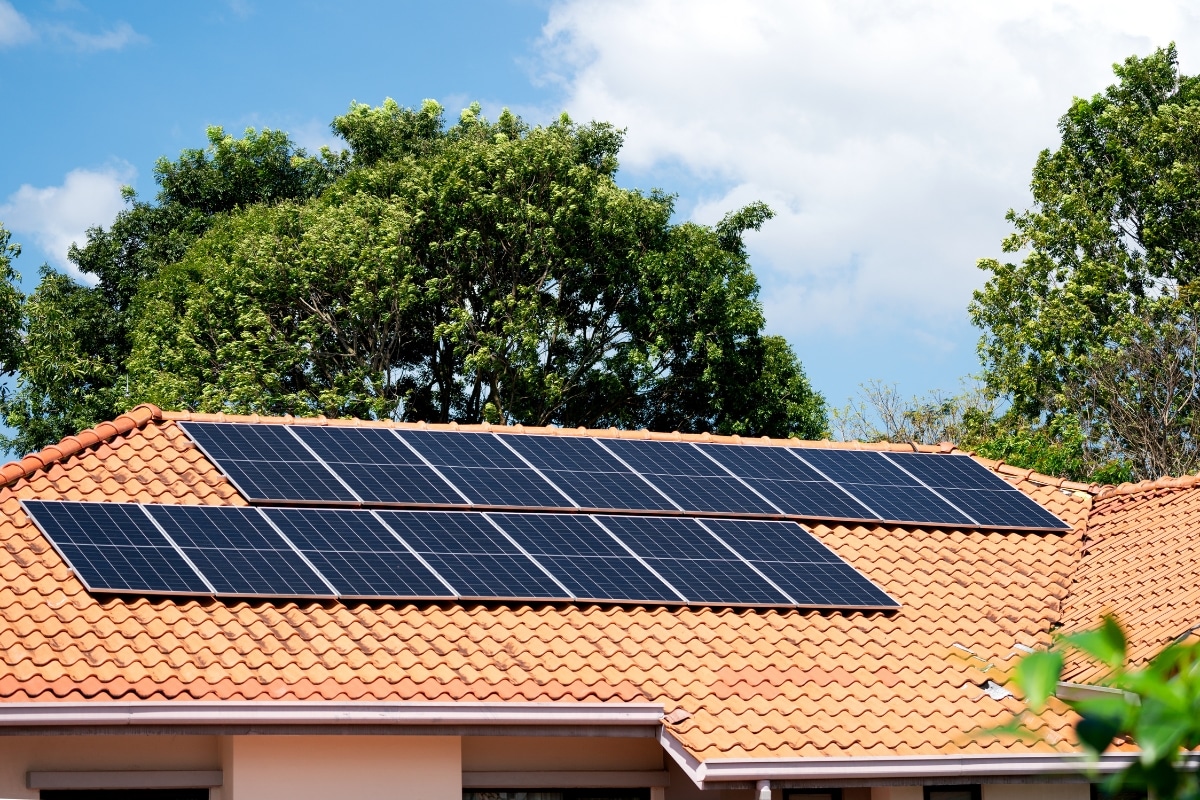
How Many Solar Panels Does the Average Home Need?
There is no universal number of solar panels that every house needs.
Many residential systems contain somewhere around a dozen to several dozen panels, but using an “average” panel count is not a reliable way to design a solar system.
Two homes of identical size can require completely different solar systems.
For example, one homeowner may use natural gas for several major appliances and drive a gasoline-powered vehicle. Another homeowner with the same size house may have electric appliances, multiple air conditioners, a swimming pool, an electric vehicle, and a Level 2 EV charger.
The second home could consume significantly more electricity even though the homes have similar square footage.
That is why solar installers generally begin with actual electricity consumption rather than the number of bedrooms or square footage alone.
What Determines How Many Solar Panels You Need?
Several factors determine the appropriate solar panel count for a residential property.
- Annual electricity consumption
- Monthly electricity usage
- Solar panel wattage
- Amount of usable sunlight
- Roof direction and angle
- Shading
- Available roof area
- System losses and efficiency
- Local climate
- Future electricity consumption
- Electric vehicle charging
- Battery-storage goals
A professional solar panel installation assessment considers these factors together instead of simply choosing a predetermined number of panels.
Start With Your Electricity Usage
Your electricity consumption is one of the most important factors in determining how many solar panels you may need.
Instead of looking only at your most recent electric bill, review approximately 12 months of electricity usage when possible. Electricity consumption can change substantially throughout the year, particularly in the Coachella Valley.
Summer electricity consumption in Palm Desert and surrounding desert communities may be considerably higher than usage during cooler months because of air-conditioning demand.
Your utility statements generally show electricity consumption in kilowatt-hours, or kWh.
Add your monthly electricity consumption over a full year to determine your approximate annual usage.
For example:
- January: 700 kWh
- February: 650 kWh
- March: 700 kWh
- April: 800 kWh
- May: 950 kWh
- June: 1,200 kWh
- July: 1,500 kWh
- August: 1,550 kWh
- September: 1,300 kWh
- October: 950 kWh
- November: 800 kWh
- December: 700 kWh
In this simplified example, the household would consume approximately 11,800 kWh annually.
That annual number is much more useful for preliminary solar sizing than simply looking at the dollar amount of one utility bill.
Why Should You Use kWh Instead of Your Electric Bill Amount?
Your monthly electric bill can change because of electricity rates, rate structures, fees, credits, seasonal pricing, and other utility charges.
Solar panels produce electricity measured in kilowatt-hours.
Therefore, determining how much electricity the home actually consumes gives a solar designer a better starting point than simply saying, “My electric bill is $400 per month.”
Two homeowners could have similar bills while consuming different amounts of electricity depending on their utility plan and usage pattern.
How Does Solar Panel Wattage Affect the Number of Panels?
Not all solar panels have the same power rating.
Residential solar panels are rated according to the amount of power they can produce under standardized testing conditions. A higher-wattage panel can generally produce more electricity than a lower-wattage panel when other conditions are similar.
For example, imagine one solar design uses 400-watt panels while another uses 450-watt panels.
If both systems are intended to produce a similar amount of energy, the system using higher-wattage panels may require fewer individual panels.
This is one reason a homeowner should not focus exclusively on panel count.
Total system capacity and expected annual production are more important than simply having a certain number of panels on the roof.
How Can You Estimate the Number of Solar Panels?
A simplified solar-panel estimate can begin with the following concept:
Annual household electricity consumption ÷ estimated annual electricity production per panel = approximate number of panels needed.
However, estimating how much electricity each panel will produce requires additional information, including:
- Panel wattage
- Average solar exposure
- Roof direction
- Roof angle
- Temperature
- Shading
- Inverter efficiency
- Wiring and system losses
- Dust and environmental conditions
This is why an online calculation should be considered an initial estimate rather than a final solar-system design.
JJ Energy also provides a solar panel calculator that homeowners can use as a starting point when evaluating a potential solar project.
What Would a Solar Panel Calculation Look Like?
Consider a hypothetical home that uses approximately 12,000 kWh of electricity per year.
For an illustrative calculation only, assume:
- Annual electricity use: 12,000 kWh
- Solar panel rating: 400 watts
- Average equivalent peak solar exposure: 5.5 hours per day
- Estimated overall production factor after system losses: 80%
A simplified calculation would estimate annual production from one panel at approximately:
0.4 kW × 5.5 hours × 365 days × 0.80 = approximately 642 kWh per year
Then:
12,000 kWh ÷ 642 kWh = approximately 19 solar panels
This does not mean every home using 12,000 kWh annually needs 19 panels. It is only an example showing how the calculation works.
A real solar design must account for the home’s location, roof, equipment, shading, utility requirements, electricity-consumption pattern, and expected system production.
Does Living in Palm Desert Affect Solar Panel Sizing?
Yes. Geographic location has a significant influence on solar production.
Palm Desert and the greater Coachella Valley receive abundant sunshine, making the region well suited for residential solar energy production.
However, desert conditions also create unique considerations.
Homes in Palm Desert, Palm Springs, Rancho Mirage, La Quinta, Indian Wells, Indio, Cathedral City, Desert Hot Springs, and Coachella may experience substantial air-conditioning demand during hot weather.
A home may therefore have excellent solar exposure while simultaneously having high electricity consumption.
The objective is not simply to fit as many panels as possible on the roof. The system should be designed around realistic energy consumption and production expectations.
Does Roof Direction Matter?
Yes. Roof orientation can affect the amount and timing of solar electricity production.
Panels positioned where they receive strong solar exposure can generally produce more energy than panels located on heavily shaded or less favorable roof sections.
A solar designer may evaluate several roof surfaces to determine where panels can be placed efficiently.
Important considerations include:
- Roof orientation
- Roof pitch
- Available space
- Nearby trees
- Neighboring buildings
- Chimneys and vents
- HVAC equipment
- Roof condition
- Required access and setback areas
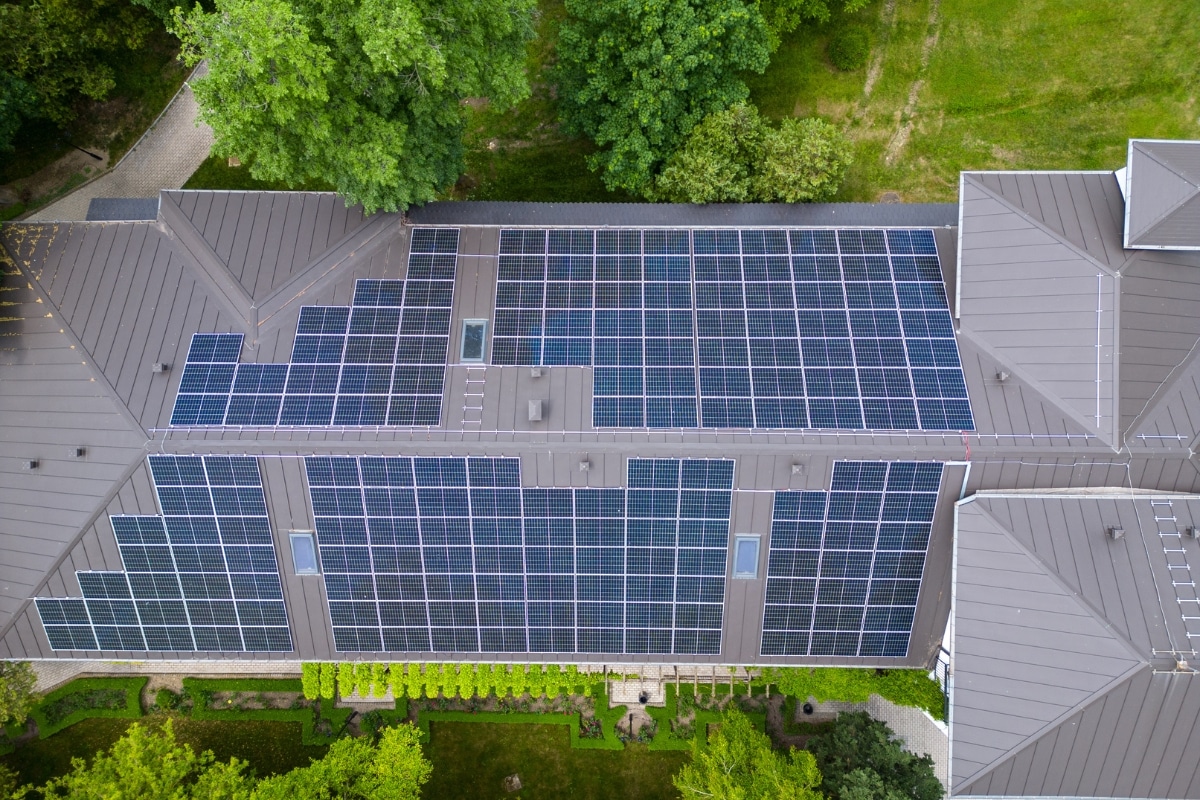
A home with a large roof does not automatically have a large amount of usable solar space.
How Does Shade Affect the Number of Solar Panels?
Solar panels need adequate exposure to sunlight to produce electricity effectively.
Shade from trees, nearby buildings, roof structures, equipment, or architectural features can reduce solar production.
If part of a roof receives substantial shade, a solar designer may recommend placing panels on another roof section rather than simply adding more panels to compensate.
Modern solar-system design can also use equipment configurations that help manage differences in panel production, but preventing unnecessary shading remains important.
How Much Roof Space Do Solar Panels Need?
The roof area needed depends on the physical dimensions of the panels, the number of panels, their layout, roof obstacles, and applicable installation requirements.
For example, a proposed 20-panel system cannot be evaluated simply by multiplying the dimensions of one panel by 20.
A professional layout must account for:
- Panel dimensions
- Spacing
- Roof edges
- Ridges and valleys
- Fire-access requirements
- Vents
- Skylights
- HVAC equipment
- Roof penetrations
- Shaded areas
A site evaluation helps determine how much of the roof is actually suitable for solar installation.
What If Your Roof Cannot Fit Enough Solar Panels?
If usable roof space is limited, there may still be options.
Depending on the property and project, a solar contractor may evaluate:
- Higher-wattage solar panels
- Alternative roof sections
- Different panel layouts
- Energy-efficiency improvements
- Reducing unnecessary electricity consumption
- Ground-mounted solar when appropriate
- Other property-specific solutions
The most appropriate solution depends on the home, local requirements, budget, and energy goals.
Should You Size Solar Based on Your Current Electricity Use?
Your current electricity usage is an important starting point, but it may not tell the entire story.
Think about how your household’s electricity needs could change during the next several years.
You may want to discuss future plans such as:
- Buying an electric vehicle
- Installing a Level 2 EV charger
- Adding a swimming pool or spa
- Installing additional air conditioning
- Converting gas appliances to electric
- Adding an accessory dwelling unit
- Expanding the home
- Working from home
- Adding battery storage
- Increasing household occupancy
If you expect electricity consumption to rise substantially, telling your solar installer before the system is designed can help avoid sizing the project around an outdated usage pattern.
How Does an Electric Vehicle Affect Solar Panel Needs?
An electric vehicle can increase household electricity consumption because charging shifts some of the energy previously purchased as gasoline into the home’s electric load.
How much additional electricity is needed depends on:
- Vehicle efficiency
- Miles driven
- How frequently you charge at home
- Charging habits
- Whether you also charge elsewhere
If you expect to purchase an EV, tell your solar designer even if you do not currently own one.
JJ Energy provides both solar installation and EV charging solutions, allowing homeowners to evaluate the home’s broader electrical requirements together.
Do You Need More Solar Panels If You Have a Pool?
A swimming pool can contribute significantly to household electricity consumption, particularly when pumps, heaters, automation equipment, or other electrical components operate frequently.
Rather than estimating the extra solar panels based solely on having a pool, review the home’s actual electricity consumption and determine how much energy the pool equipment uses.
Variable-speed pumps and other energy-efficient equipment may also affect the home’s overall energy demand.
Does Air Conditioning Affect Solar System Size?
Absolutely.
Air conditioning can represent a substantial portion of electricity consumption for homes in Palm Desert and throughout the Coachella Valley.
This is why using an annual electricity history is important.
If a solar estimate were based only on mild-weather electricity use, it could substantially underestimate the energy requirements of a desert home during summer.
A properly designed system should consider the home’s full annual consumption pattern.
Should You Install Extra Solar Panels?
Installing more panels than necessary is not automatically better.
The appropriate solar-system size depends on your electricity usage, available roof space, utility requirements, financial goals, future energy demand, and whether battery storage is part of the project.
An oversized system can add unnecessary project cost if the additional production does not provide sufficient value.
An undersized system may leave the homeowner purchasing more electricity from the grid than anticipated.
The goal is to design the system intentionally rather than maximizing panel count.
Can You Add More Solar Panels Later?
In some situations, an existing solar system can be expanded, but an expansion may not be as simple as installing several additional panels.
Factors that may need evaluation include:
- Existing inverter capacity
- Available roof space
- Electrical-panel capacity
- Existing equipment compatibility
- Permitting
- Utility interconnection requirements
- Current system design
- Warranty considerations
If you already expect your electricity consumption to increase significantly, discussing those plans during the initial solar design may be more practical than assuming additional panels can easily be installed later.
Does Your Electrical Panel Affect Solar Installation?
It can.
Your home’s electrical system must be evaluated as part of the solar installation process.
Older homes or properties with substantial new electrical loads may require additional electrical work before or during a solar project.
For example, a homeowner may be combining:
- Solar panels
- Battery storage
- EV charging
- Electric appliances
- New HVAC equipment
In these situations, overall electrical capacity becomes increasingly important.
JJ Energy also provides electrical system upgrades for Coachella Valley properties, allowing the solar design and electrical infrastructure to be evaluated together.
How Does Battery Storage Affect Solar Panel Sizing?
Solar panels and battery storage perform different functions.
Solar panels produce electricity. A battery stores available energy for later use, subject to the capabilities and design of the system.
Adding a battery does not necessarily mean the home automatically needs more solar panels.
However, the solar system and battery should be designed together when possible because the homeowner may have specific goals such as:
- Storing daytime solar energy
- Using stored energy later in the day
- Reducing reliance on grid electricity
- Supporting selected loads during an outage
- Creating a broader home-energy management strategy
JJ Energy offers backup power systems in addition to residential solar installation.
Can Solar Panels Power Your Entire Home?
A residential solar system can be designed to generate a substantial portion of a home’s annual electricity needs, but the actual result depends on system size, solar exposure, household consumption, utility arrangements, and other factors.
It is also important to distinguish between annual energy production and instantaneous electricity demand.
A solar system might generate an amount of electricity over the course of a year that is comparable to household annual consumption, but that does not mean the home is disconnected from the grid or that solar panels alone can operate the entire house at every moment.
Solar production changes throughout the day and with weather conditions, while household consumption also varies.
Will Solar Panels Power Your Home During an Outage?
Not necessarily.
Most standard grid-connected residential solar systems are designed to shut down when the utility grid fails. This prevents the solar system from sending electricity onto utility lines while utility workers may be repairing them.
Homeowners who want backup power generally need a properly designed system with compatible battery storage, backup-capable equipment, or another approved backup configuration.
Learn more in JJ Energy’s guide, Do Solar Panels Work During a Power Outage?
How Accurate Are Online Solar Calculators?
Online solar calculators can provide a useful preliminary estimate, but they should not replace a professional site evaluation.
A calculator usually cannot fully evaluate:
- Roof condition
- Detailed shading
- Roof obstructions
- Electrical equipment
- Local permitting requirements
- Actual panel placement
- Future electrical loads
- Property-specific installation challenges
Use an online calculator to understand the approximate scale of the project, then have the property evaluated before making a final decision.
How Do Solar Installers Determine the Right System Size?
A professional solar evaluation typically considers several pieces of information together.
These may include:
- Electricity history: Reviewing past electricity consumption helps establish the home’s current energy requirements.
- Roof evaluation: The installer determines how much usable roof space is available and identifies potential obstructions.
- Solar exposure: Roof direction, shade, and local solar conditions affect expected production.
- Equipment selection: Panel wattage, inverter equipment, and other components influence system capacity.
- Electrical evaluation: The home’s electrical system is reviewed to determine whether additional work may be necessary.
- Future energy demand: EVs, pools, additions, and electric appliances can increase future electricity consumption.
- Homeowner goals: The design should reflect whether the homeowner is primarily focused on energy production, long-term electricity costs, battery storage, backup capability, or a combination of objectives.
What Information Should You Have Before Getting a Solar Quote?
Providing good information can help make a solar estimate more useful.
Before requesting a quote, consider gathering:
- Approximately 12 months of electric bills
- Your annual kWh consumption
- Information about planned EV purchases
- Future home additions
- Pool or spa plans
- Electrical appliance upgrades
- Battery-storage goals
- Information about recent roof work
The more accurately the installer understands your present and future electricity needs, the more effectively the system can be designed.
How Many Solar Panels Do You Need in Palm Desert?
The correct number of solar panels for a Palm Desert home cannot be determined from square footage alone.
A smaller home with heavy air-conditioning use, a pool, and an electric vehicle could use more electricity than a considerably larger home with efficient equipment and lower energy consumption.
For homeowners throughout the Coachella Valley, a better approach is to evaluate:
- Annual kWh consumption
- Summer electricity demand
- Roof solar exposure
- Available installation space
- Panel efficiency and wattage
- Future household electricity use
- Battery-storage objectives
This produces a system designed around the property instead of an arbitrary panel count.
Solar Panel Installation in the Coachella Valley
JJ Energy Inc. provides professional solar panel installation and energy solutions throughout Palm Desert and the Coachella Valley.
Service areas include Palm Desert, Palm Springs, Cathedral City, Rancho Mirage, Indian Wells, La Quinta, Indio, Coachella, Desert Hot Springs, and surrounding communities.
JJ Energy can evaluate your current electricity consumption, roof, electrical infrastructure, future energy requirements, solar goals, and backup-power needs to help determine an appropriate residential solar-system design.
In addition to solar installation, JJ Energy provides backup power systems, EV charging solutions, and electrical system upgrades.
For a professional solar evaluation, call (760) 552-3772 or request a solar quote online.
Frequently Asked Questions
1. How many solar panels do I need for my house?
The number depends primarily on your annual electricity consumption, solar panel wattage, available sunlight, roof conditions, shading, system efficiency, and future electricity needs. Reviewing approximately 12 months of electricity usage is a good starting point.
2. Is 20 solar panels enough to power a house?
Twenty solar panels may be appropriate for some homes and insufficient or excessive for others. The number alone does not determine whether the system is properly sized. Panel wattage, annual production, electricity consumption, roof orientation, and other factors must also be considered.
3. How many solar panels do I need for 1,000 kWh per month?
A household using approximately 1,000 kWh monthly consumes around 12,000 kWh annually. The required number of panels depends on panel wattage and the amount of electricity each panel can realistically produce at the property. A professional solar design should be used for the final calculation.
4. Can you have too many solar panels?
A larger system is not automatically better. Adding panels beyond what makes sense for the home’s electricity usage, property, utility arrangement, and energy goals can increase installation costs without necessarily providing proportional value.
5. Does a larger house always need more solar panels?
No. Electricity consumption is more important than square footage alone. A smaller home with multiple air conditioners, a pool, electric appliances, and EV charging may consume more electricity than a much larger but more efficient house.
6. Do I need more solar panels if I have an electric car?
Potentially. Charging an electric vehicle at home increases household electricity consumption. If you currently own an EV or plan to purchase one, tell your solar installer so the expected charging load can be considered during system design.
7. How does air conditioning affect the number of solar panels I need?
Air conditioning can significantly increase electricity consumption, especially in Palm Desert and the Coachella Valley. Reviewing a full year of utility usage helps capture high summer cooling demand when determining an appropriate solar-system size.
8. Do solar panels work with battery storage?
Yes. Solar panels can be combined with compatible battery-storage equipment. Solar panels generate electricity while batteries store available energy for later use. The exact system configuration depends on the equipment, household energy needs, and backup-power goals.
9. Can I add more solar panels later?
Sometimes, but system expansion depends on available roof space, inverter capacity, electrical equipment, permitting, utility requirements, and equipment compatibility. If you expect significant future electricity use, discuss it during the original system design.
10. Who installs solar panels in Palm Desert and the Coachella Valley?
JJ Energy Inc. provides solar panel installation in Palm Desert and throughout the Coachella Valley, including Palm Springs, Rancho Mirage, Cathedral City, Indian Wells, La Quinta, Indio, Coachella, and Desert Hot Springs. Call (760) 552-3772 or contact JJ Energy to discuss your home’s solar needs.